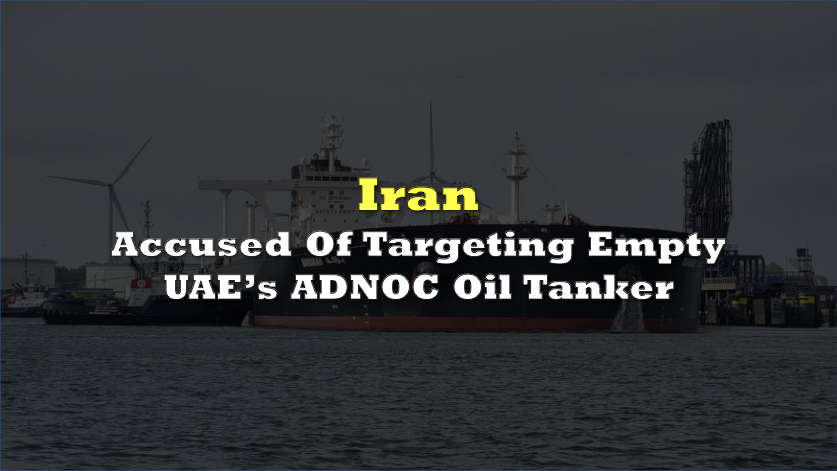

An ADNOC-affiliated crude oil tanker was struck by two drones while transiting near the Strait of Hormuz, turning a no-casualty incident into another test of Gulf shipping security and energy-market stability.
The vessel, identified as the MV Barakah, was empty at the time of the incident, and no crew members were injured, according to ADNOC’s maritime energy logistics unit. The company said the tanker was impacted by two drones and that further updates would be provided.
It was separately reported that UKMTO said a tanker had been hit by unknown projectiles while transiting about 78 nautical miles north of Fujairah, with all crew safe.
The UAE accused Iran of carrying out the attack and said the tanker was affiliated with ADNOC, Abu Dhabi’s state oil company. The UAE Ministry of Foreign Affairs condemned the incident as an attack on a national carrier and called it a violation of international law and UN Security Council Resolution 2817, which it said affirmed freedom of navigation and rejected attacks on commercial vessels.
— OSINTtechnical (@Osinttechnical) May 4, 2026
While the immediate operational damage appears limited, the target profile is the story. A tanker linked to ADNOC, one of the Gulf’s most important state energy companies, was hit while moving through a corridor that remains central to global crude, fuel, and LNG flows.
The incident lands inside an already stressed energy corridor. Iran has continued to restrict access to the Gulf for most non-Iranian vessels after hostilities involving the US, Israel, and Iran began on February 18, and that Tehran had warned it may target ships it considers unauthorized to transit the Strait.
Reuters had already reported in March that energy infrastructure around Oman and the Gulf had been hit during the conflict, including a fuel tank at Oman’s Duqm commercial port after attacks by unmanned aircraft. That earlier strike came as Qatar halted LNG production representing about a fifth of global supply, Saudi Arabia suspended production at its largest domestic refinery, and major Israeli gas fields were offline.
For markets, the Barakah strike is a classic tail-risk event with minimal immediate loss but high strategic weight. The vessel was empty, which limits direct supply impact, but the attack reinforces the risk premium around Gulf transit, war-risk insurance, crew safety, and the reliability of shipping through Hormuz.
Information for this story was found via the sources and companies mentioned. The author has no securities or affiliations related to the organizations discussed. Not a recommendation to buy or sell. Always do additional research and consult a professional before purchasing a security. The author holds no licenses.