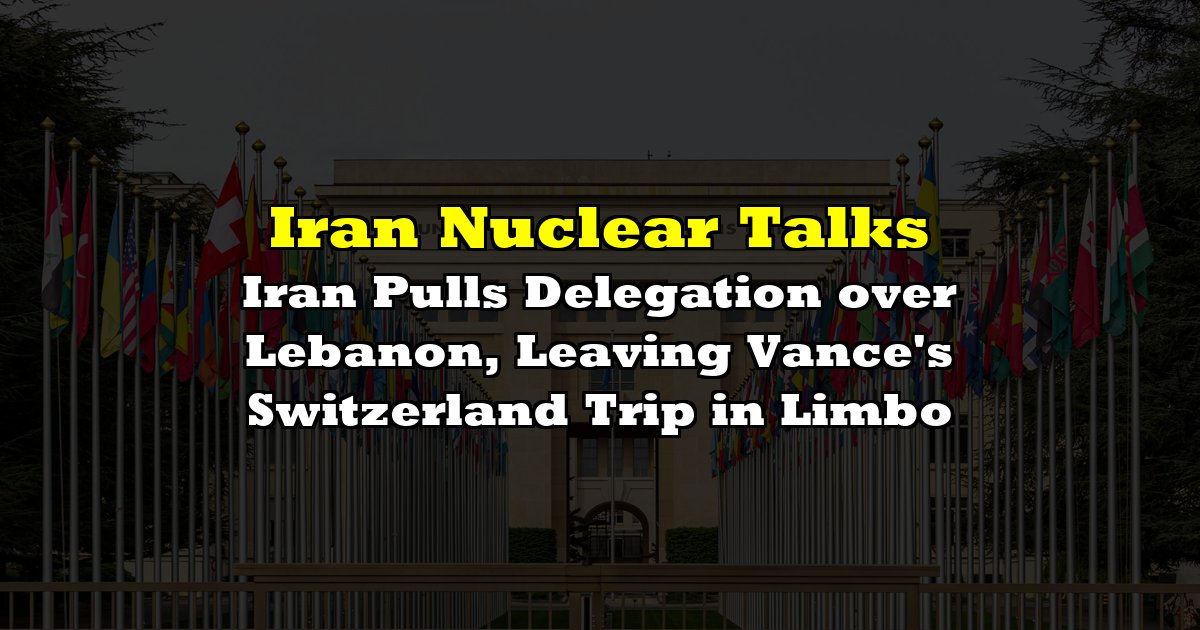

The first formal round of U.S.-Iran nuclear negotiations has been thrown into doubt after Iran pulled its delegation from a planned trip to Switzerland, citing Israel’s ongoing military operations in Lebanon as a violation of the framework agreement that was supposed to govern the talks.
Lebanese territory has become the sticking point. Iranian officials contend that Israeli military activity pushing as far as 10 kilometres into southern Lebanon breaches the opening clause of the memorandum of understanding underpinning the deal.
Tehran had made its position plain to Washington and to the mediating parties beforehand, warning that developments in Lebanon would directly determine whether negotiations moved forward. The 60-day negotiating window the Iranian delegation had been preparing to enter is now suspended.
 Sponsored · Selkirk Copper Mines
The postponement drew Vice President JD Vance into limbo as well. The White House confirmed Thursday night that Vance, who had been set to lead the American delegation in Switzerland, would delay his departure, with officials pointing to difficult logistics. That explanation landed shortly after Iran’s announcement had already circulated through regional media.
Vance had earlier made the relatively uncommon move of appearing at the White House briefing room to defend the broader agreement against criticism from some congressional Republicans, who have argued Washington conceded too much to Tehran in exchange for sanctions relief and access to a potential $300 billion rebuilding fund.
The deal itself carries substantial commitments from Iran. Tehran is required to dilute its stockpile of highly enriched uranium under international supervision and to renounce nuclear weapons development in writing.
Trump envoy Steve Witkoff, in a closed briefing with senior lawmakers on national security committees, described how Iran had agreed to open its nuclear sites to IAEA inspections. He also said a separate letter addressed to IAEA Director-General Rafael Mariano Grossi had been drafted to permit U.S. nuclear inspectors to operate inside Tehran.
Before the suspension was announced, the U.S. had lifted its blockade of the Strait of Hormuz, allowing oil tankers to move freely through the corridor for the first time in months.
Whether the Switzerland talks can be rescheduled will depend heavily on how the situation in Lebanon develops.
Information for this story was found via the sources and companies mentioned. The author has no securities or affiliations related to the organizations discussed. Not a recommendation to buy or sell. Always do additional research and consult a professional before purchasing a security. The author holds no licenses.