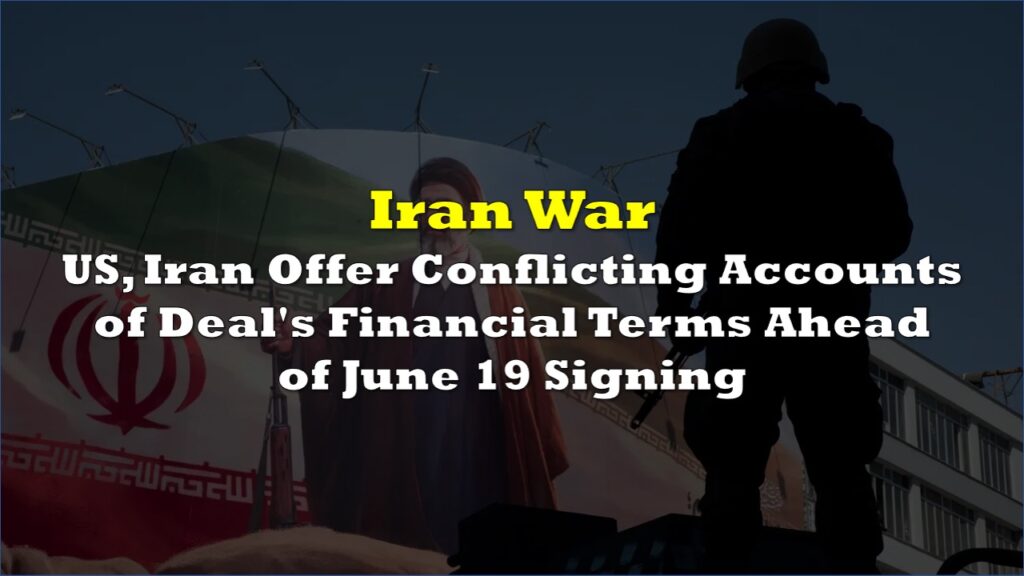

Iran has released what it says is the executed Islamabad Memorandum of Understanding with the US, a document that moves the conflict into a narrow 60-day implementation window before the hardest terms are settled.
IRNA, Iran’s state news agency, published the full text of the MoU. Reuters reported that the White House submitted the interim agreement text to Congress after the signing. Vice President JD Vance said the 60-day period under the agreement began Thursday.
The document creates two tracks that do not move at the same speed. One track is immediate: the US is expected to issue temporary authorizations covering Iranian oil sales and the services needed to move those cargoes, including finance, insurance, and shipping. The same framework also points toward making Iranian funds more usable during negotiations, including frozen or restricted assets.
 Sponsored · Silver47 Exploration Inc.
The other track is deferred: permanent sanctions termination, the treatment of Iran’s enriched material, the future of enrichment, and the final compliance mechanism are left for the next phase.
READ: Relief, Then Compliance: The US-Iran Agreement Explainer
The result is a deal whose commercial effects may arrive before its legal foundation is finished. In market terms, that is a lot of duration risk for a 60-day instrument.
The most explosive number in the document is not attached to oil exports. It is the proposed reconstruction framework. The MoU refers to a plan, developed by the US with regional partners, for at least $300 billion in reconstruction and economic development for Iran.
 Sponsored · Cambria Gold Mines
However, the text does not yet resolve who contributes the money, what portion would come from private capital, what share would be routed through regional governments, or whether any US public funds would be involved.
Vance has publicly pushed back on the interpretation that the US is handing Iran cash. The Guardian reported him saying Washington was not “giving up a cent” to Tehran.
The interim agreement also includes a US commitment to lift its naval blockade on Iranian ports within 30 days, while Iran would allow free commercial passage through the Strait of Hormuz during the 60-day period.
The MoU also folds Lebanon into the ceasefire framework. That makes the document broader than a bilateral US-Iran pause, suppressing multiple fronts under one interim bargain, which raises the value of compliance but also increases the number of ways the arrangement can be disrupted.
The nuclear section gives Washington a headline commitment while leaving the mechanics for later. The published text says Iran will not obtain or build nuclear weapons. It also points to an agreed method for handling Iran’s enriched material, with IAEA supervision expected to play a role.=
The interim period also limits escalation. Iran is to keep its nuclear program in its current condition, while Washington is not supposed to impose new sanctions or add regional forces during the same window.
The MoU also points to a final agreement that would be endorsed by a binding UN Security Council resolution. That would give the eventual deal a stronger legal structure than a temporary political understanding.
Information for this story was found via the sources and companies mentioned. The author has no securities or affiliations related to the organizations discussed. Not a recommendation to buy or sell. Always do additional research and consult a professional before purchasing a security. The author holds no licenses.