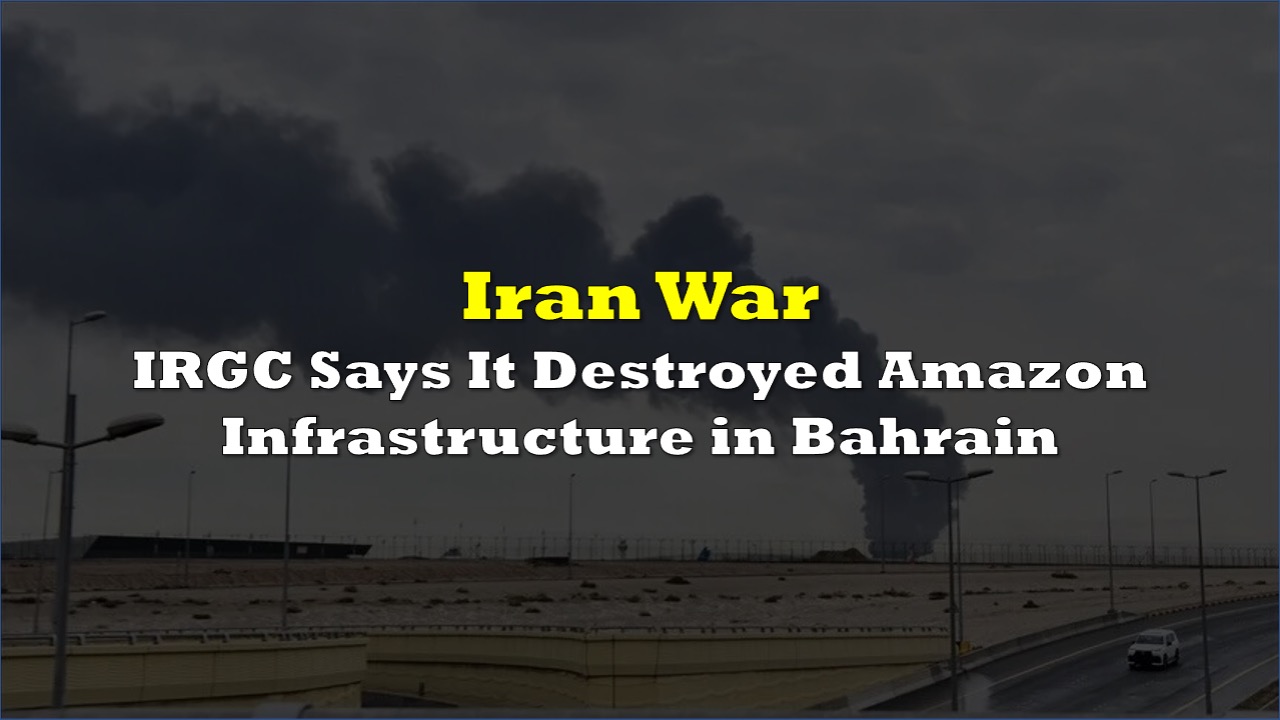

Iran’s Islamic Revolutionary Guard Corps says its forces hit and wrecked Amazon‘s (Nasdaq: AMZN) main data facility in Bahrain using multiple cruise missiles, per a statement from IRGC-affiliated Tasnim News Agency.
The IRGC statement calls the strike retaliation for a US airstrike on the Darkhovin nuclear facility, which Iran describes as a civilian site still under construction.
The Guard’s aerospace forces also claimed to have destroyed a missile defense radar system and a US F-15 fighter jet in Jordan on the same day, and claimed strikes on US drone facilities at Bahrain’s Sakhir Air Base a day earlier.
 Sponsored · Selkirk Copper Mines
This is not Iran’s first stated attack on Amazon infrastructure. In March, Iranian drones struck two AWS data centers in the United Arab Emirates. Amazon reported service disruptions and advised customers to shift workloads to other regions. A month later, on April 1, Iran struck an actual AWS facility in Bahrain. Bahrain’s Interior Ministry confirmed its Civil Defence forces responded to a resulting fire at the site.
Also on April 1, the IRGC issued a warning naming 18 US companies as “legitimate targets,” among them Microsoft, Cisco, Intel, Google, Meta, Apple, Nvidia and Oracle. The IRGC said it based the list on the companies’ alleged role in enabling US and Israeli strikes on Iranian officials, and it told employees at those firms to leave their workplaces immediately.
The US and Israel launched major strikes on Iran on February 28, opening a war that has run in phases since. Fighting paused under a ceasefire from early April through mid-June, when the US and Iran signed a 14-point memorandum of understanding on June 17 that reopened the Strait of Hormuz and set a 60-day window for talks.
That agreement unraveled after Iran struck commercial shipping in the strait on July 6 and 7, though Tehran disputes that account. Iran’s chief negotiator, Mohammad Bagher Ghalibaf, says Washington broke the ceasefire first, citing reinstated oil sanctions, continued strikes on southern Iran and ongoing Israeli strikes on Lebanon as violations that preceded the tanker attacks.
Trump declared the ceasefire over, formally notified Congress that hostilities had resumed, and the US has struck Iran nightly since, reaching a 10th consecutive night as of Tuesday. Iran said on July 18 that it was suspending its own commitments under the June agreement.