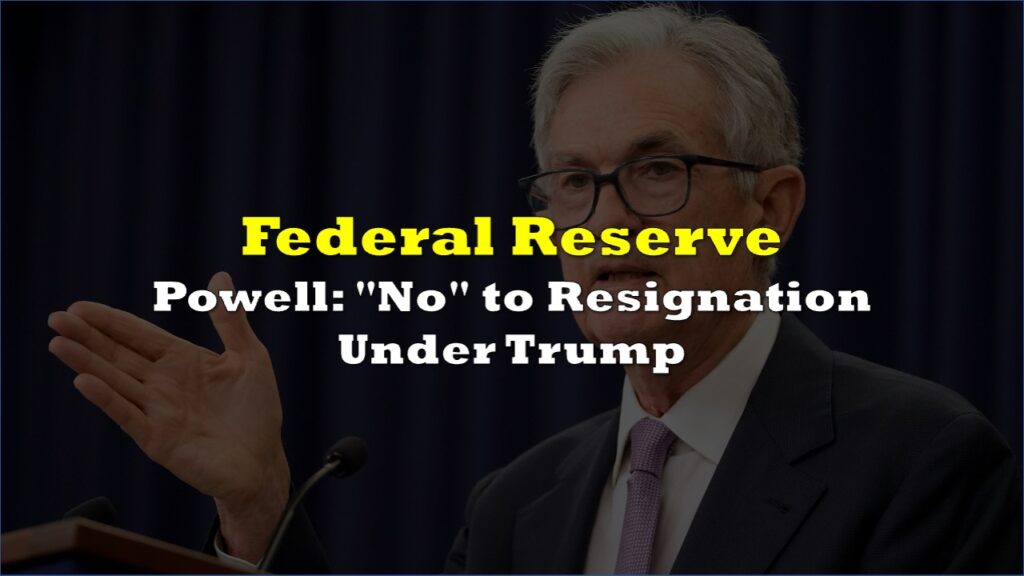

Jerome Powell, outgoing Federal Reserve Chair, announced on Wednesdaythat he will continue serving as a governor on the central bank’s Board of Governors for an indefinite period after his chairmanship ends on May 15. His decision hinges on overseeing the conclusion of a probe into renovations at the Fed’s headquarters, a matter that has drawn significant scrutiny in recent months.
Powell emphasized his commitment to transparency and finality in the investigation, stating, ‘I will not leave the board until this investigation is well and truly over.’ He noted that the events of the past three months left him with no choice but to remain in his governor role, a position he still holds for two more years, to ensure the process is resolved in the best interest of the institution. His resolve to stay temporarily denies President Donald Trump a majority on the seven-member board, even as Trump’s other appointees, including Christopher Waller and Michelle Bowman, remain in place.
Beyond the investigation, Powell’s decision comes against a backdrop of intense criticism from Trump, who appointed him during his first term. Powell described the personal attacks as ‘unprecedented in our 113-year history,’ expressing concern over their impact on the Fed’s independence. ‘I worry that these attacks are battering the institution and putting at risk the ability to conduct monetary policies without political influence,’ he told reporters during his final press conference as chair.
 Sponsored · Cambria Gold Mines
The transition at the Fed also sees Kevin Warsh, Trump’s nominee to succeed Powell, clearing a key hurdle with the Senate Banking Committee’s approval on April 29, advancing to a full Senate vote. Powell congratulated Warsh and pledged to maintain a low profile once the new chair is confirmed, underscoring that there can only be one leader at the helm.
Separately, legal challenges surrounding the Fed persist, with Powell addressing broader concerns among central bankers about executive branch actions threatening the institution’s autonomy. He stressed the importance of ignoring political considerations to maintain credibility with the public.
On the policy front, the Federal Reserve held interest rates steady at a range of 3.5% to 3.75% for the third time this year, a decision marked by significant dissent with four officials voting against the majority, the highest level since 1992. The 8-4 split, alongside rising Treasury yields and a surge in Brent crude to $118.03 per barrel, reflects persistent inflation fears driven by global energy prices and geopolitical tensions.
Information for this story was found via the sources and companies mentioned. The author has no securities or affiliations related to the organizations discussed. Not a recommendation to buy or sell. Always do additional research and consult a professional before purchasing a security. The author holds no licenses.