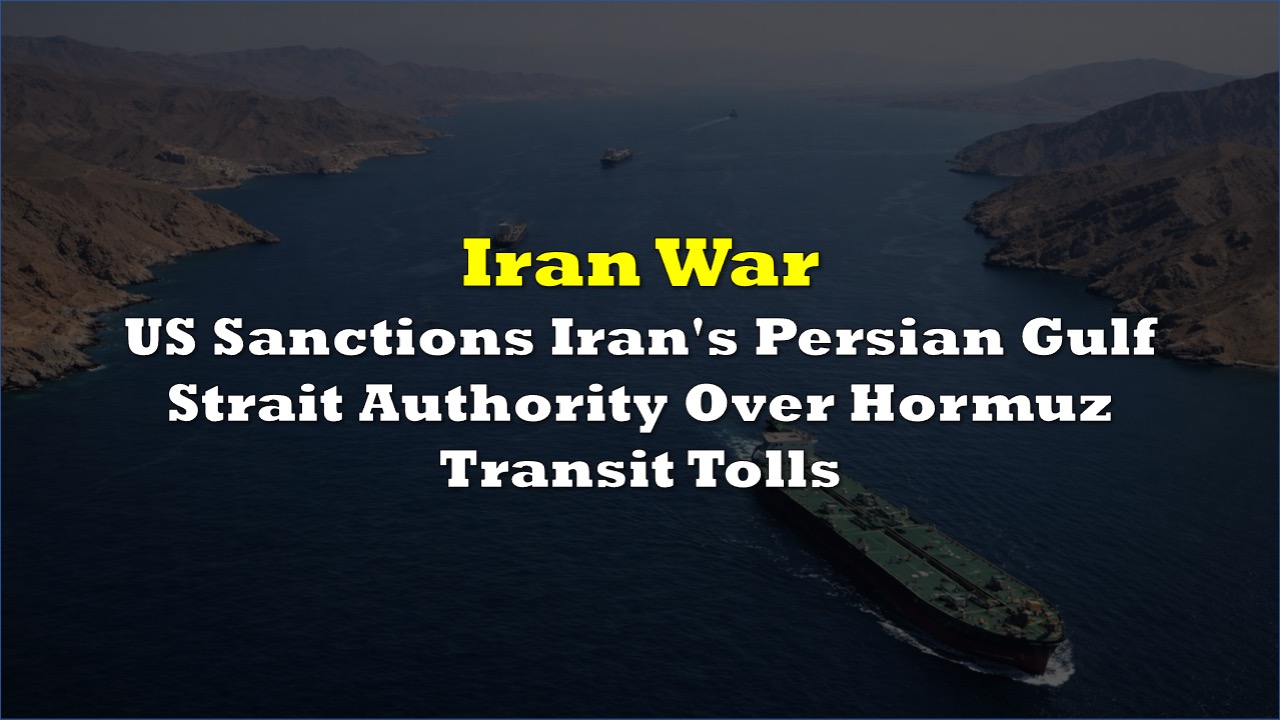

The US Treasury Department designated Iran’s Persian Gulf Strait Authority to its Specially Designated Nationals list on Wednesday, targeting the body Tehran created to collect transit fees in the Strait of Hormuz and warning that anyone paying those fees may face sanctions exposure.
“The Iranian military’s latest attempt to extort global maritime trade is proof that Economic Fury has left the regime desperate for cash,” Treasury Secretary Scott Bessent said. “Treasury has deprived the Iranian regime of revenue for their weapons programs, terrorist proxies, and nuclear ambitions. Under President Trump’s leadership, we will remain relentless in our pursuit to constrict the network of vessels, intermediaries, and buyers through which Iran exports both its oil and malevolence.”
Iran established the PGSA on May 5, 2026, to formalize a toll scheme it had announced in March, shortly after closing the strait when the US-Israel war began on February 28. Operators seeking to transit must contact the authority at [email protected] and complete a permit application covering vessel ownership, insurance, crew manifests, and cargo before receiving authorization. Reports indicate some vessels have paid as much as $2 million per transit. Israel-linked vessels face an outright ban; US-linked vessels and those from countries Iran designates as hostile face severe restrictions or denial.
 Sponsored · Cambria Gold Mines
OFAC described the PGSA as working with the IRGC and the IRGC Navy to direct vessel traffic and impose “illegitimate tolls” on international maritime commerce, and said it “spearheads an Iranian-controlled scheme that flagrantly violates international law and US sanctions.”
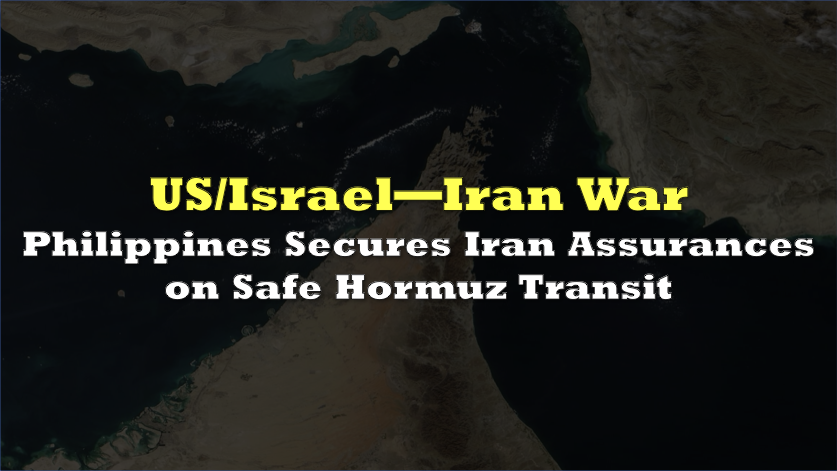
The strait carries roughly a fifth of the world’s oil supply. Iran closed it to commercial shipping on February 28 and partially reopened it in April after a ceasefire in Lebanon.
Treasury warned that shippers, insurers, financiers, and charterers that cooperate with the authority “may be providing support to and receiving services from the IRGC” and may face sanctions exposure — regardless of payment method, including cash, digital assets, and in-kind arrangements.
OFAC had pre-empted this on April 28, publishing FAQ 1249 to confirm that toll payments to Iran or the IRGC for Hormuz passage are prohibited for US persons and create significant exposure for non-US firms. On May 1, it followed with a standalone alert extending that warning explicitly to the PGSA permit scheme. On May 20, the PGSA published a map claiming a “controlled maritime zone” across both sides of the chokepoint.
Iran’s permit-and-toll regime has no standing under international maritime law. Article 34 of the United Nations Convention on the Law of the Sea bars coastal states from suspending or conditioning transit passage through international straits on prior authorization. By requiring vessels to obtain PGSA permits and follow IRGC-designated corridors as a condition of safe passage, Iran is acting outside that framework.
Information for this story was found via the sources and companies mentioned. The author has no securities or affiliations related to the organizations discussed. Not a recommendation to buy or sell. Always do additional research and consult a professional before purchasing a security. The author holds no licenses.