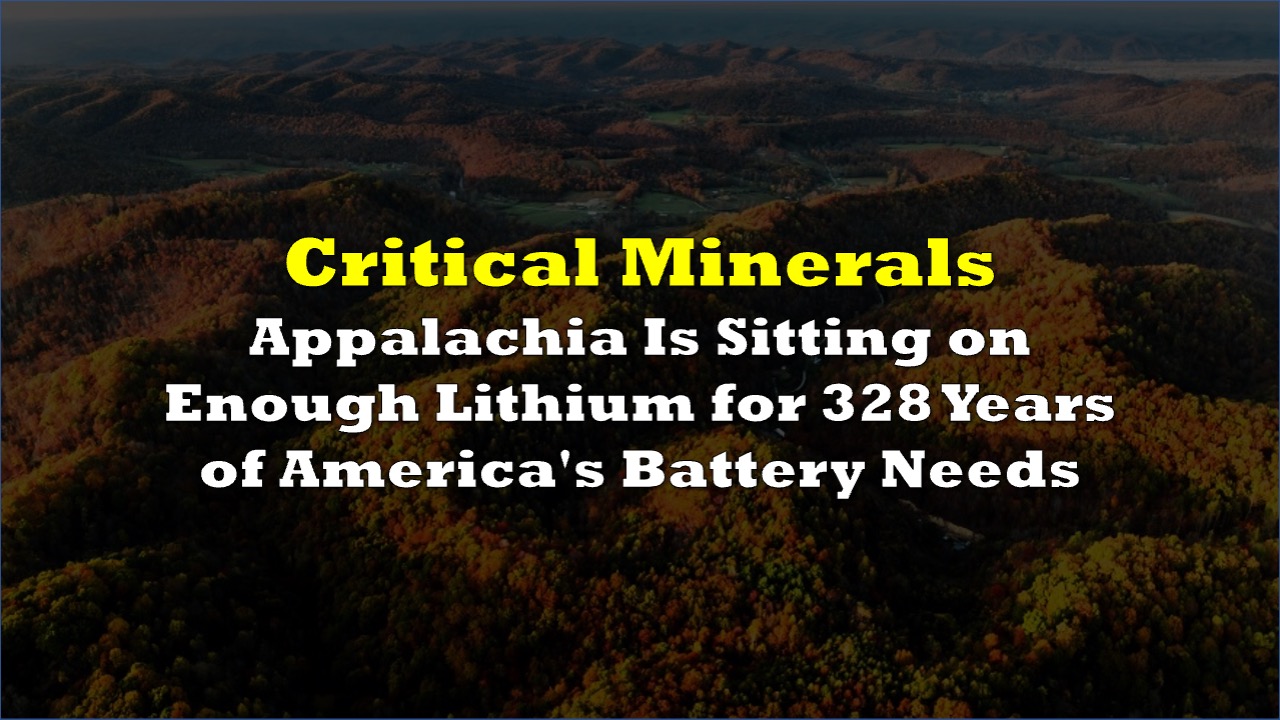

A US Geological Survey assessment published on Tuesday estimates the Appalachian region holds 2.3 million metric tons of undiscovered, economically recoverable lithium — enough at current import levels to supply the US for 328 years and to power 130 million electric vehicles or 1.6 million grid-scale batteries.
The US currently imports more than half its lithium, and China controls roughly 85% of global lithium-ion battery cell production. Domestic output is limited to a single commercial lithium mine, operated by Albemarle Corp.
Related: China Has Quietly Spent $57 Billion to Control the World’s Critical Minerals
 Sponsored · Cambria Gold Mines
The southern Appalachians, concentrated in the Carolinas, hold an estimated 1.43 million metric tons of lithium oxide; the northern stretch through Maine and New Hampshire accounts for roughly 900,000 metric tons. Both regions contain lithium in pegmatite formations — large-grained hard rock — distinct from the brine deposits that dominate South American production.
“This research shows that the Appalachians contain enough lithium to help meet the nation’s growing needs — a major contribution to US mineral security, at a time when global lithium demand is rising rapidly,” USGS Director Ned Mamula said.
The 328-year figure assumes US lithium demand stays flat at 2025 import levels. It will not. McKinsey projects the global battery market to grow roughly 2.8 times by 2030, driven by EV adoption and grid storage expansion, compressing that supply window substantially — though analysts say it would still represent decades of meaningful domestic contribution.
“Undiscovered” in USGS terminology means a probabilistic geological estimate, not a confirmed deposit ready for extraction. Translating it into a working mine requires years of drilling, environmental review, and permitting.
The Kings Mountain area of North Carolina hosted the first large-scale lithium pegmatite mining in US history, and Maine deposits have attracted scientific attention for decades. Neither has produced at a commercial scale in the modern era.
Pegmatite extraction also runs at a higher cost per ton than brine operations, which pump underground saltwater and recover lithium through evaporation or chemical processing.
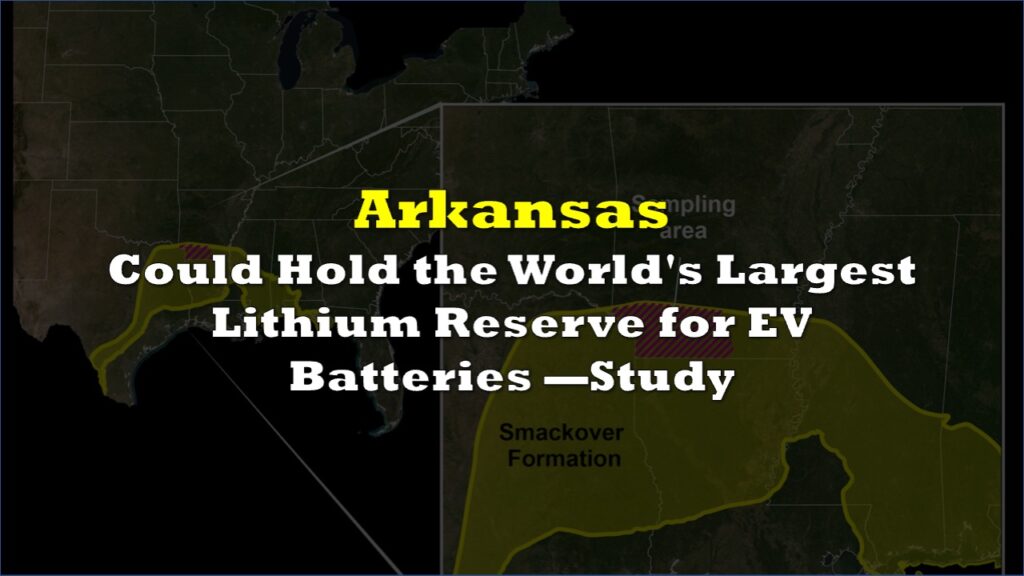
The Appalachian findings follow a 2024 USGS assessment of Arkansas’s Smackover formation, which estimated between 5 and 19 million tons of lithium in underground brines — together suggesting the eastern US holds far larger lithium resources than previously understood, though years of development separate any of it from affecting EV supply chains in a material way.
Information for this story was found via the sources and companies mentioned. The author has no securities or affiliations related to the organizations discussed. Not a recommendation to buy or sell. Always do additional research and consult a professional before purchasing a security. The author holds no licenses.