

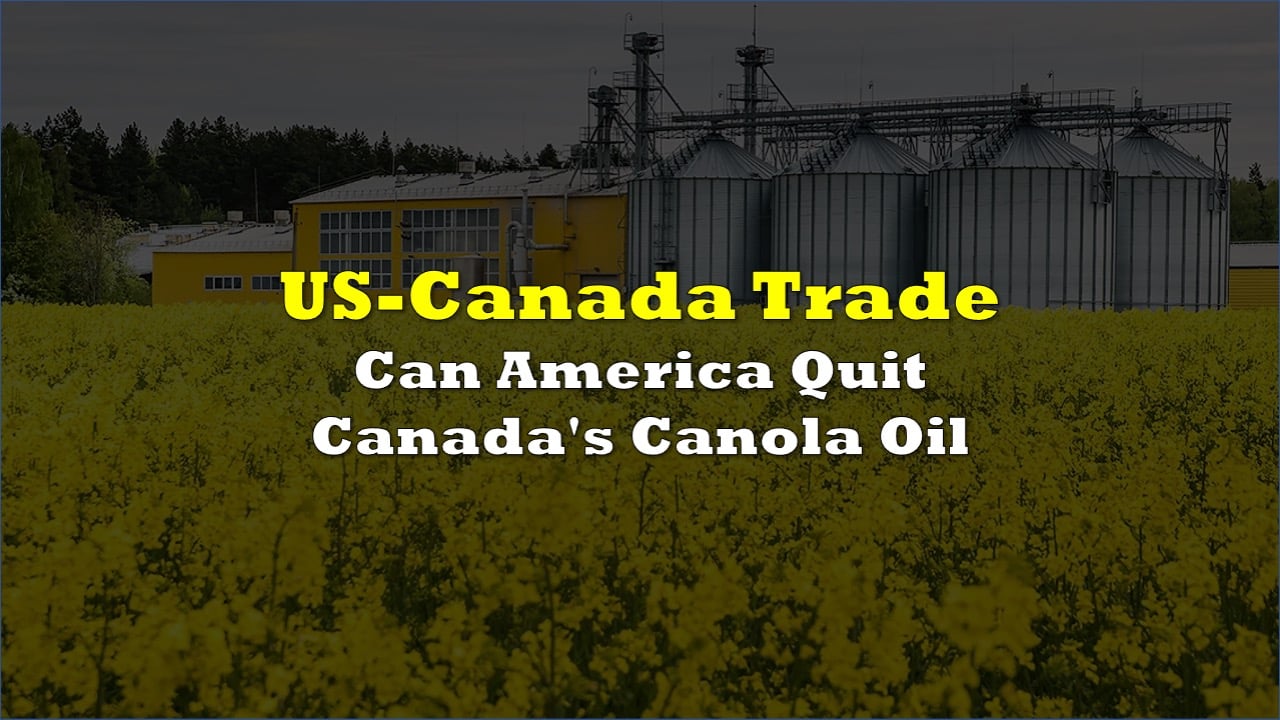

US Trade Representative Jamieson Greer dismissed concerns about the collapsed trade talks with Canada this week, telling CNBC that Canadian imports amount to just 0.06% of US consumption and that “there’s no possible way it can really affect US well-being.” Canola oil is one example of how that math can look different up close.
Canada sends nearly 96% of its canola oil exports to the US, which imported 2.5 million tonnes of it in 2025, worth roughly C$4.2 billion, according to the Canola Council of Canada.
That dependency has already been tested. Trump imposed 25% tariffs on Canadian canola seed, oil and meal in February 2025, part of a broader round of duties on Canadian goods. The Canola Council of Canada warned at the time the tariffs would have “devastating impacts on farmers, input providers, canola crushing activities” across the industry.
 Sponsored · Selkirk Copper Mines
Separately, a US decision that same month to disqualify Canadian canola from a biofuel tax credit sent canola oil imports down 44% year-over-year in February 2025 and 42% in March, according to US government trade data.
That doesn’t necessarily mean collapse, though. Tariffs tend to raise prices rather than eliminate trade when substitutes are scarce, like with canola oil. The same USDA analysts who tracked the 2025 decline expected US importers would “be willing to cover the tariffs and pass the increased cost onto consumers.”
The council estimates Canadian canola oil imports support $11.2 billion a year in US economic activity and 22,000 American jobs. Much of it never reaches a restaurant fryer at all, since canola oil is also a major feedstock for US renewable diesel and biodiesel production, which is part of why the tax credit dispute hit trade so hard.
Canada’s dominance of the canola market traces back to the 1970s, when plant scientists Baldur Stefansson and Keith Downey bred a new, food-safe variety of rapeseed at the University of Manitoba. The industry trademarked the resulting oil as “canola,” short for “Canadian oil, low acid,” in 1978.




One Response
1% tariff on all resource exports.