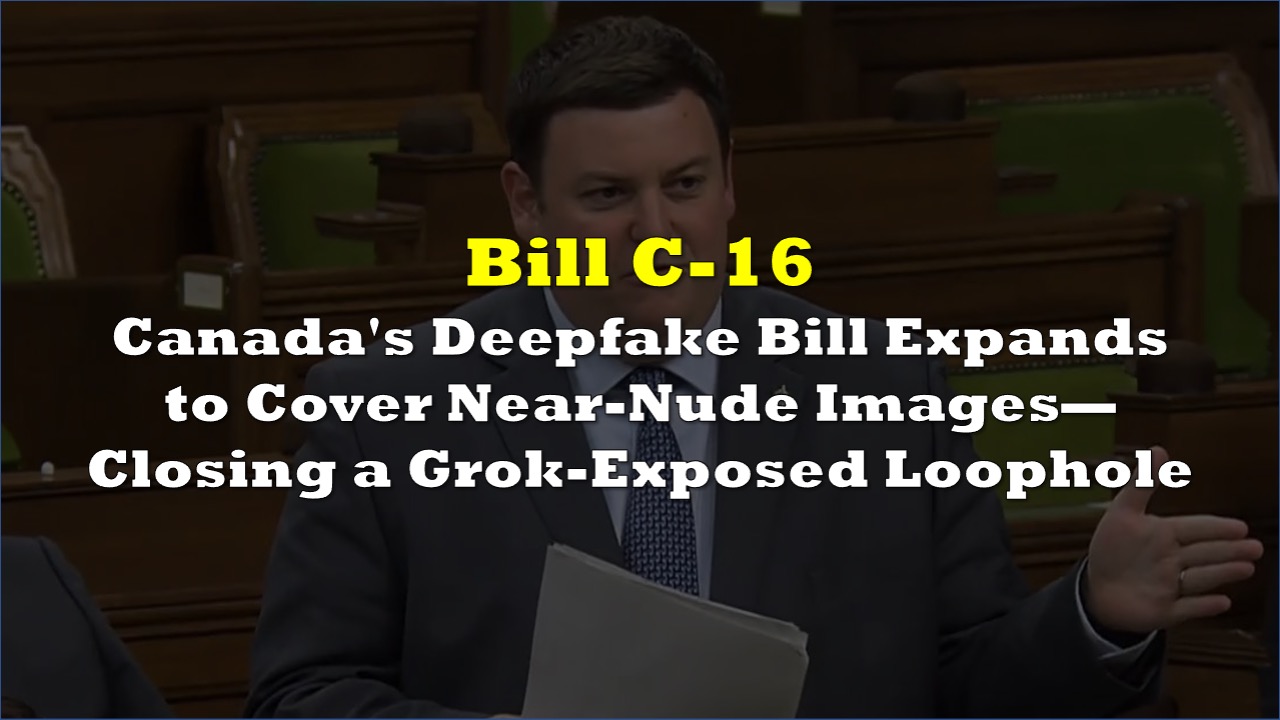

A House of Commons justice committee has amended Canada’s proposed deepfake legislation to cover “nearly nude” images, closing a loophole that would have left AI-generated sexual images outside the law’s reach.
The amendment to Bill C-16 came directly in response to the Grok chatbot controversy earlier this year. When Elon Musk’s Grok proliferated on X, generating near-nude edits of women without consent, the original bill would not have criminalized them — its definition only covered images showing subjects fully nude, exposing sexual organs, or engaged in explicit sexual activity.
Conservative MP Andrew Lawton put forward the “nearly nude” expansion. Liberal parliamentary secretary Patricia Lattanzio said it “clarifies the scope of the offence, aligns with evolving case law and responds to the needs of victims.”
 Sponsored · Selkirk Copper Mines
Bloc Québécois MP Rhéal Fortin objected, arguing the term was not defined specifically enough to withstand legal challenge. A second Lawton amendment adds an explicit reference to artificial intelligence software in the definition of “intimate image,” ensuring the bill captures AI-generated content.
“We’re trying to ensure that we don’t end up having to come back to the drawing board because this fails to capture the technologies that we’re dealing with here,” Lawton said.
Beyond deepfakes, Bill C-16 criminalizes coercive control in intimate relationships and restores mandatory minimum imprisonment penalties courts struck down as unconstitutional. One of three tougher-on-crime bills introduced by the Carney government, it must still clear the Senate before becoming law.
AI Minister Evan Solomon said Monday the bill is part of a wider government effort, signalling the issue could also be addressed in upcoming privacy and online harms legislation. “We believe that non-consensual sharing of sexualized imagery is violence towards women and we are going to do our job to protect citizens, vulnerable Canadians,” he said.
The committee also adopted a Lawton amendment requiring platforms to remove reported intimate images within 48 hours — though a departmental expert flagged uncertainty about whether the requirement would actually speed removals, a question likely to resurface in Senate debate.
Information for this story was found via the sources and companies mentioned. The author has no securities or affiliations related to the organizations discussed. Not a recommendation to buy or sell. Always do additional research and consult a professional before purchasing a security. The author holds no licenses.