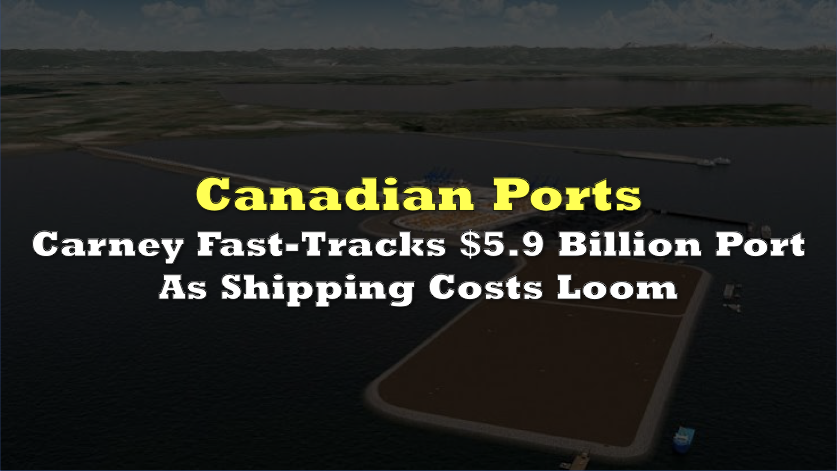

Canada’s effort to prevent a potential $900 million annual shipping-cost shock on its Pacific coast faces a four-year timing gap. Ottawa estimates port congestion could begin adding $800 million to $900 million a year to transportation costs as early as 2031, while the $5.9 billion Roberts Bank Terminal 2 expansion is not targeted to begin commercial operations until 2035.
The discrepancy sits inside the government’s decision to designate the Delta, BC project as one of national interest, intended to accelerate remaining federal approvals and bring the opening forward from 2039, but it does not immediately increase container capacity.
According to Transport Canada, the additional costs could arise from capacity constraints and ultimately be passed on to Canadian businesses and consumers.
 Sponsored · Cambria Gold Mines
The Vancouver Fraser Port Authority is pursuing a three-berth facility capable of handling another 2.4 million twenty-foot equivalent units annually. That would increase the Port of Vancouver’s container capacity by approximately 50%, supporting an estimated $100 billion in annual trade.
The port authority is targeting a final investment decision by mid-2027. The $5.9 billion estimate excludes financing costs, and the national-interest designation does not represent a federal commitment to directly fund the entire project.
TerraMarine has been selected as the preferred construction partner.
The broader Port of Vancouver Gateway Strategy includes rail expansion, logistics improvements, and industrial land development that could help manage congestion before the new terminal opens. However, the October 30 announcement does not establish how much these measures could offset the projected shipping-cost increases beginning in 2031.
Ottawa expects the completed terminal to support approximately 17,000 jobs across Canadian supply chains, contribute $3 billion annually to GDP, and generate approximately $631 million in annual tax revenues.
The project also forms part of Prime Minister Mark Carney’s strategy to double Canadian exports to non-U.S. markets by 2035, the same year the terminal is now expected to begin commercial operations.
The expansion received federal environmental approval in April 2023, subject to 370 legally binding conditions. Tsawwassen First Nation has said its consent is conditional and does not constitute unconditional support, citing concerns over treaty rights and environmental impacts.
Ottawa says those environmental safeguards will remain in place despite the accelerated approval process.
For exporters using Canada’s largest port, the immediate question is therefore not simply whether the terminal can open by 2035 but whether existing infrastructure and interim investments can prevent the shipping costs the government warns could materialize four years sooner.