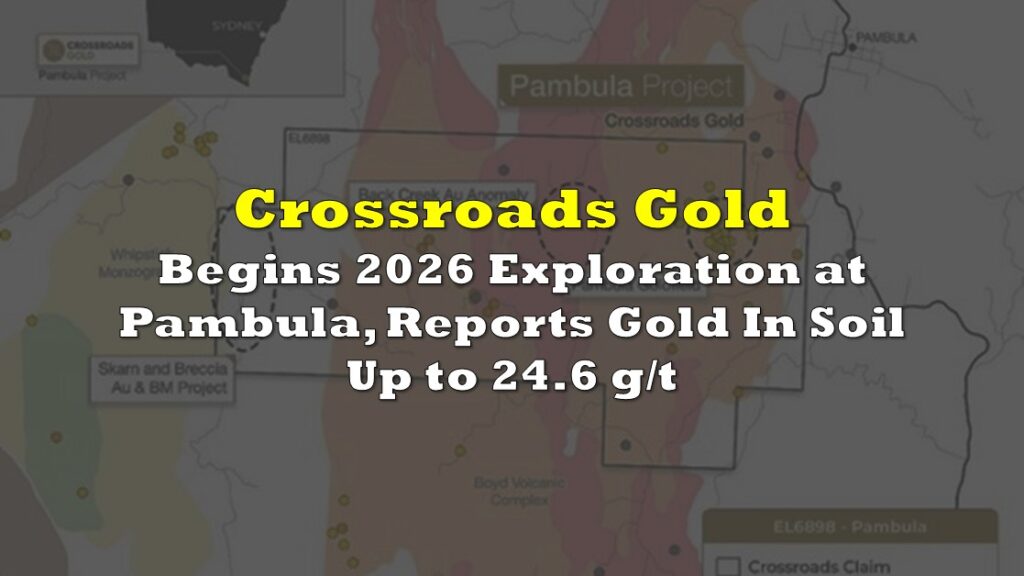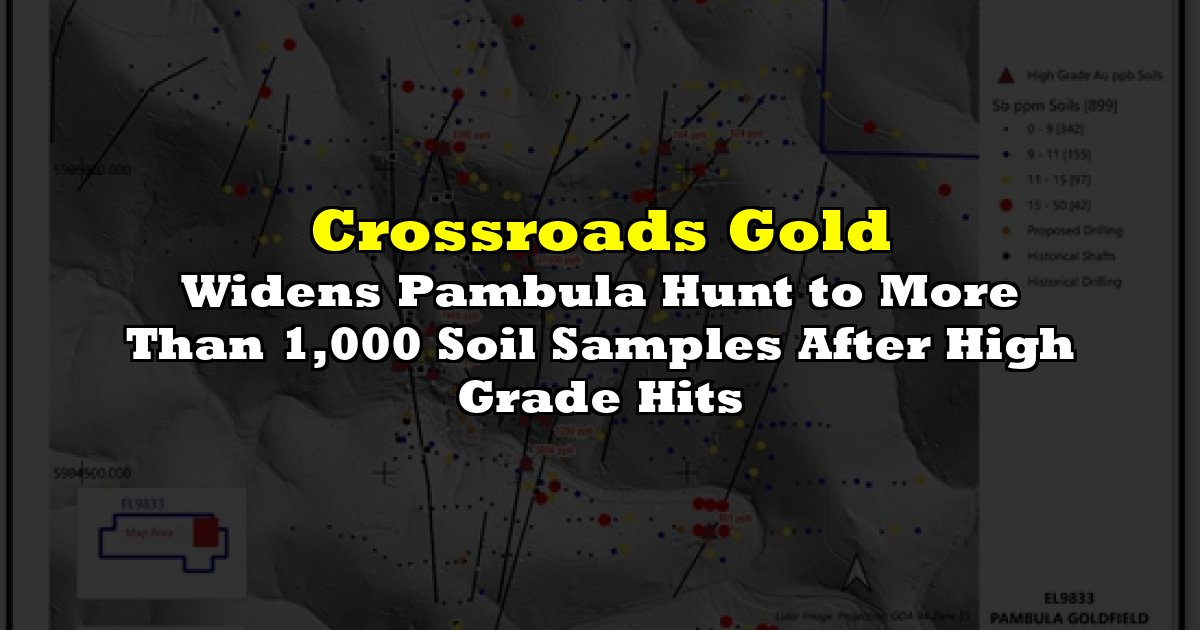

Crossroads Gold (TSXV: CRG) has widened its search for gold at the Pambula project in southeastern Australia, expanding a soil sampling campaign to more than 1,000 samples and completing a high resolution LiDAR survey across the entire historic goldfield.
The company has collected 892 samples so far, analyzing them with portable XRF for a suite of pathfinder elements. Of those, 103 have returned gold assay results, with another 543 still sitting in the lab queue with results expected in the coming weeks.
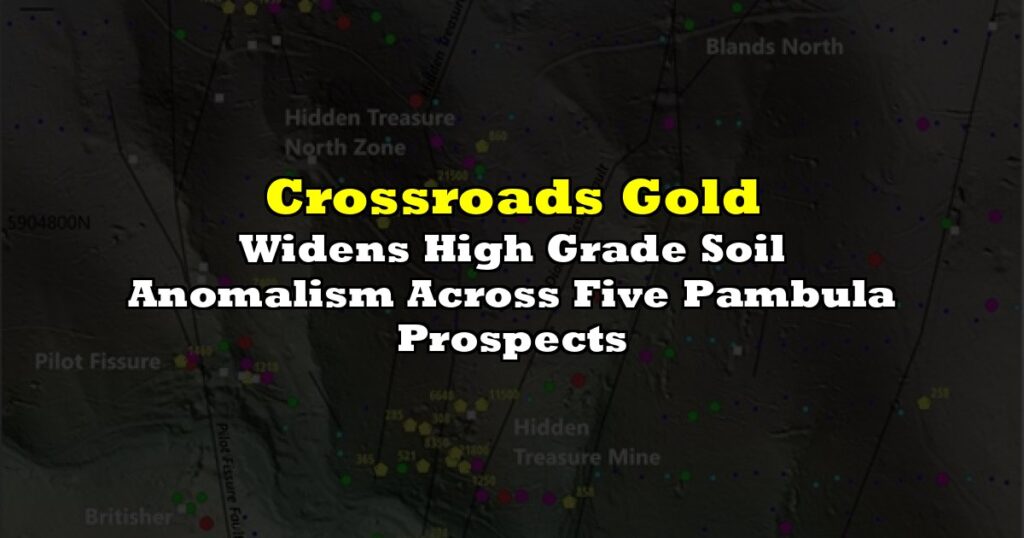
The best sample to date graded 24.6 g/t gold, backed by a check assay of 21.3 g/t. Others came in at 8.35 g/t, 7.4 g/t, 5.05 g/t and 3.35 g/t, with the bulk of recent results coming from the Hidden Treasure Gold Mines area.
The airborne LiDAR survey, which strips away vegetation to map the ground beneath, meanwhile turned up a remarkable amount of old workings, including 122 adits, 115 shafts, 981 shallow prospecting pits and 708 interpreted trenches. That data is now expected to be combined with previously collected mapping and sampling data to help build a larger understanding for the project.
“The newly acquired exploration datasets continue to strengthen our geological understanding and are revealing the quality of the Pambula Project we believed was there from the outset,” said Rex Motton, chief executive officer and director.
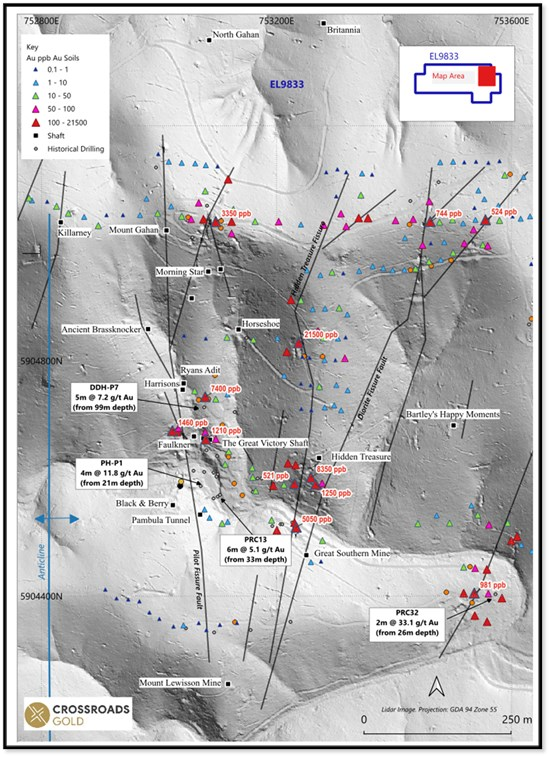
Pambula is not virgin ground. The goldfield produced upward of 40,000 ounces at recovered grades near 30 g/t in the late 1800s and early 1900s, then went quiet, leaving a district that has seen little modern exploration.
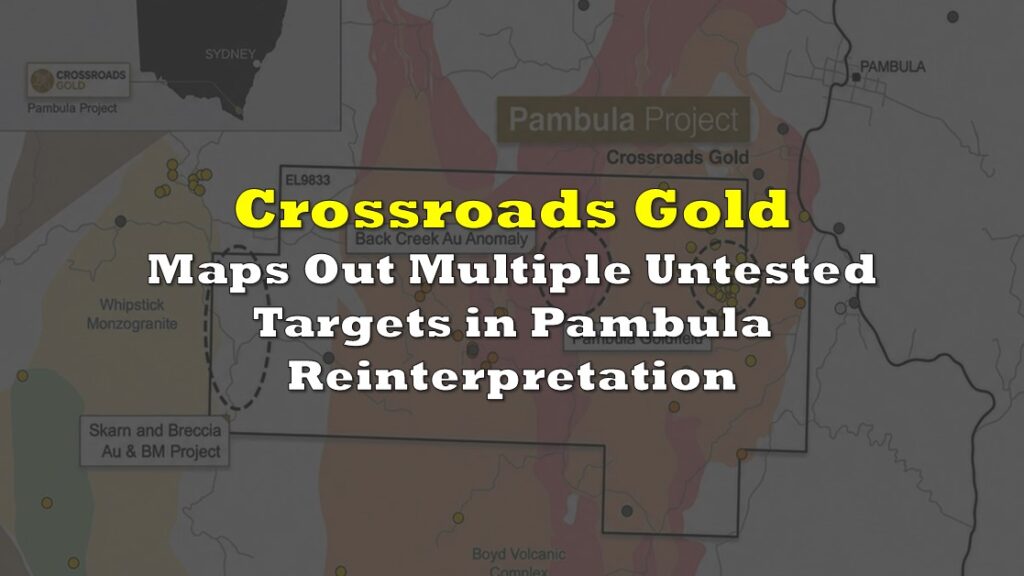
Crossroads has been building its case in stages. Earlier work defined what the company describes as a district scale hydrothermal gold system, with multiple untested targets and historical drilling that returned intervals such as 16 metres at 2.36 g/t. The project came into the fold in May, when Crossroads closed its acquisition of Roxex and its portfolio of Australian ground.
Crossroads Gold last traded at $0.22 on the TSX Venture.