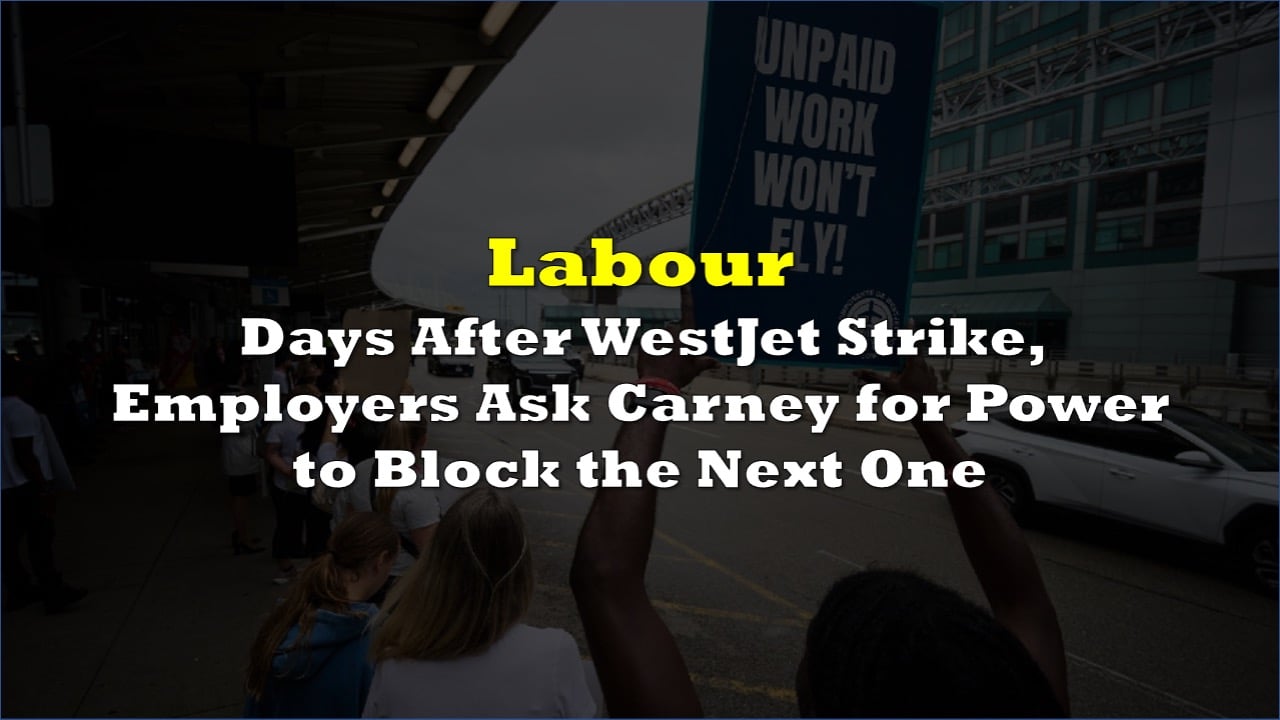

WestJet flight attendants walked off the job Sunday, the third straight summer of major airline labour disruption, before the airline and CUPE 8125 reached a tentative deal early the next morning. Two days later, employer groups are pushing Carney’s government to let the labour minister preemptively limit strikes in sectors such as airlines, railroads, and ports whenever the minister judges them a threat to the national public interest, Bloomberg reported Tuesday.
Read: 72-hour WestJet strike clock triggers early flight cuts
Unlike last year’s Air Canada flight attendants strike, Ottawa didn’t invoke Section 107 of the Canada Labour Code this time. CUPE had asked the government to stay out, and Jobs Minister Hajdu’s office said it preferred a negotiated settlement.
 Sponsored · Selkirk Copper Mines
WestJet’s offer, which the union is now taking to a ratification vote, included a 36% wage increase over four years and ground pay for hours worked, addressing the same unpaid-labour dispute that triggered the Air Canada strike.
When Ottawa invoked Section 107 within hours of the Air Canada strike starting last August, flight attendants defied the back-to-work order and stayed out until both sides reached a deal days later. Canadian Labour Congress president Bea Bruske told CBC the defiance meant Section 107 “effectively is dead” as a deterrent.
The minister can already send a stalled dispute to binding arbitration, but only once bargaining collapses — employers want the power to step in before a strike or lockout even starts.
The idea isn’t new — the Senate’s transport committee recommended something similar in June, proposing a standing tribunal with expertise in rail and marine transport that could impose mediation and arbitration whenever it judged a stoppage would harm the national interest, empowering the Governor in Council to order binding arbitration and ban the strike or lockout if bargaining still failed. Committee chair Senator David Wells said that “tariffs and trade tensions are already straining Canada’s economy.”
Ottawa has invoked Section 107 10 times since 2023, according to CBC, versus a handful of uses in the four decades before that. The pattern includes the CN and CPKC rail lockout, port disputes in Vancouver, Montreal, and Quebec, and a WestJet mechanics dispute in 2024.
Related: Canadian Propane Export Terminal Faces Strike as Labor Disputes Continue to Plague Ports
Unions call the broader push an attempt to tilt the Code toward employers, and the United Steelworkers has gone further, calling for Section 107’s repeal outright and backing a private member’s bill to do it.
Hajdu, the minister of jobs and families who holds the labour portfolio, has called Section 107 a “contentious” tool and said Ottawa is weighing guardrails or alternatives to it, but has ruled out touching the constitutional right to strike and has set no timeline for legislation.