
Canada’s near-trade deal with the US ran into a problem that extended beyond the terms Ottawa and Washington were negotiating: the US official leading the talks did not control every tariff Canada wanted reduced.
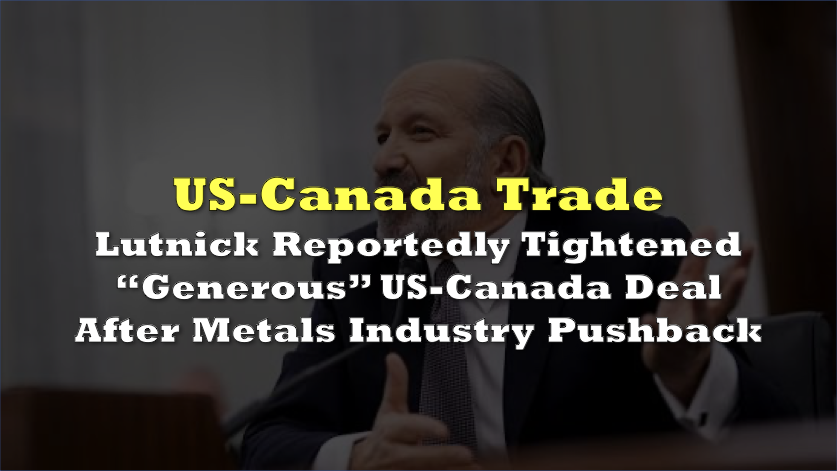
Commerce Secretary Howard Lutnick moved deeper into the negotiations during their final days and pushed back against concessions covering metals and vehicles, according to Bloomberg, after American steel and aluminum interests objected to proposed tariff relief. The intervention added another decision-maker to talks primarily conducted through US Trade Representative Jamieson Greer.
Bloomberg reported that people familiar with the negotiations said Lutnick viewed the emerging framework as too generous to Canada and became an advocate for US metals producers seeking to preserve tariff protections.
 Sponsored · Cambria Gold Mines
The reported disagreement centered partly on Section 232 tariffs, which fall under the Commerce Department rather than USTR.
The Washington Post separately reported that Lutnick and White House trade adviser Peter Navarro clashed with Greer over a proposal to reduce the existing 50% tariff on aluminum derivatives to 25% in return for Canadian concessions. An industry representative who spoke anonymously told the Post that Lutnick and Navarro pressed Greer against giving away those protections.
Bloomberg reported that US metals companies had mounted their own pressure campaign as details of possible tariff reductions circulated. By August 21, a proposed concession that would have cut steel and aluminum tariffs to 25% from 50% on a quota of Canadian imports had reportedly been narrowed.
Autos became another dividing line. Canada believed a proposed reduction in vehicle tariffs to 15% from 25% covered a wider range of vehicles, while the US position limited the relief to light vehicles, according to Bloomberg. That would have excluded medium- and heavy-duty trucks produced in Ontario by Ford Motor and General Motors.
 Sponsored · Silver47 Exploration Inc.
The dispute effectively left Canada negotiating with two centers of US tariff authority. Greer acknowledged during an August 24 CNBC interview that the arrangement could frustrate Canadian negotiators, although he dismissed reports of a Lutnick-Greer split as “a red herring.”
The White House had formally postponed a new set of 50% tariffs for three days on August 18, moving their effective date to August 22 while negotiations continued. The proclamation said senior US officials believed Canada had expressed commitments addressing several American trade complaints.
Three days later, the negotiations were over. Carney said the US introduced last-minute terms that were “unfair” and “uneconomic,” and suspended negotiations on August 21. Ottawa said roughly $28.0 billion of Canadian goods would be subjected to the new US tariffs
The prime minister later summarized Canada’s assessment more directly, saying Washington “asked too much and offered too little.” Canada had been prepared to remove remaining retaliatory tariffs on steel, aluminum, and autos if Washington substantially reduced its own duties, while encouraging provinces to restore US alcohol sales and making administrative changes around supply management.
READ: What Washington Really Demanded Before Canada Walked Away
Lutnick’s exact responsibility for the collapse remains disputed. Bloomberg cited a Canadian official who called him a major contributor but said fundamental disagreements with US demands existed before his intervention. A White House official rejected the claim that Lutnick sank the deal and instead accused Canada of making new demands outside the negotiated framework.
The breakdown nevertheless delivered what US metals producers had sought. Industry groups opposed to weakening Section 232 protections welcomed the failure, while other US business groups called for negotiations to resume.
In the end, President Donald Trump went on to declare US tariffs on “all Cars, Trucks… Automotive Parts, and Steel” would rise to 50% on January 1, 2027, after US-Canada trade negotiations collapsed.
Canada is now preparing dollar-for-dollar counter-tariffs covering sectors including steel, dairy, appliances, agricultural equipment, pulp and paper, and electronics. The Department of Finance said the measures are scheduled to take effect September 8.