
Manitoba is prepared to give up tax revenue to get money flowing into the Port of Churchill, a signal that the multibillion-dollar northern shipping project still needs help attracting the private capital its backers have been counting on.
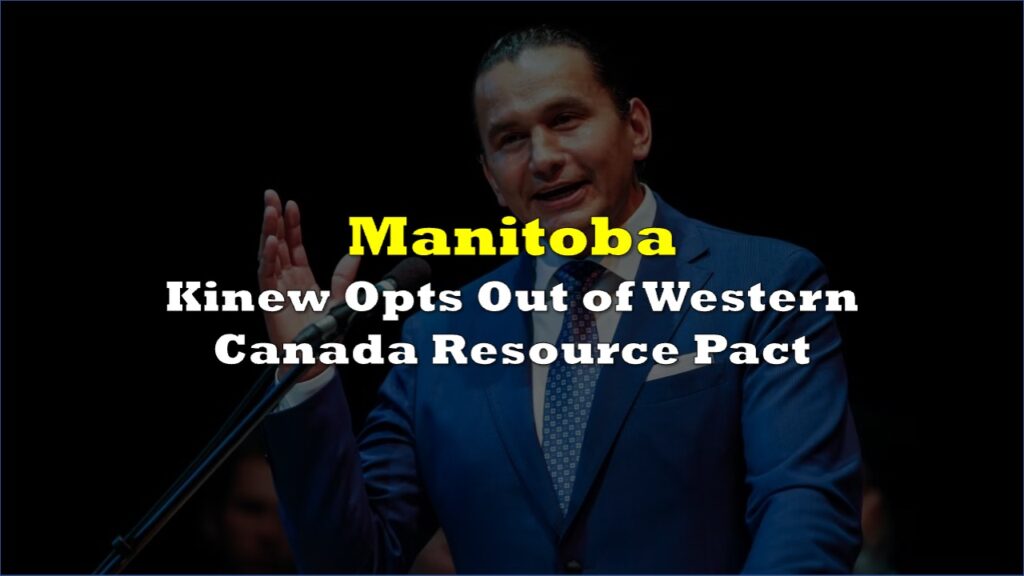
Premier Wab Kinew used the stage at the Canada Investment Summit in Toronto on Monday to announce that major capital spending on the Port of Churchill Plus project will be exempt from the province’s 7% retail sales tax. The pitch landed before a room of 250 Canadian and global investors representing more than US$13 trillion in assets.
The incentive is aimed squarely at moving the project past studies and into construction. Qualifying spending would cover a new energy corridor and liquefied natural gas facilities, work on the Hudson Bay Railway to support a Class 1 rail line, and marine icebreaking capacity or ice-class ships that would open the door to year-round shipping. Other upgrades tied to the project would also count, with the government promising a full list of eligible items at a later date.
 Sponsored · Cambria Gold Mines
The scale of the ambition is large, and so far the funding has not materialized to match it. Kinew has previously pegged the cost of expanding the port, upgrading the railway and building an offshore LNG terminal in Hudson Bay at $70 billion to $80 billion. The offshore terminal is considered necessary because the mouth of the Churchill River, where the port sits, is too narrow and shallow to handle some vessels. New studies estimate the icebreaking and ice-class vessel component alone at $100 million to $130 million.
“These new capital incentives make it easier for investors to get in on the ground floor of the largest project featured at the Canada Investment Summit,” Kinew said in a news release. He added that grain and critical minerals already moving through the port are reaching Europe faster than they would from the Port of Vancouver.
The port has had a quiet stretch. It loaded its first grain cargo in six years in early September, along with its first potash shipment. Its shipping season currently averages roughly four and a half months.
To make its case, the province is pointing to three studies released last month. Those reports concluded that year-round shipping is possible using the third highest-rated class of icebreaking vessel, while acknowledging some ice will remain in the bay and create challenges in the coming decades under global-warming scenarios.
Over the two-day summit, Kinew is holding meetings with global investment firms to pitch the port alongside mining, infrastructure and agriculture projects totalling more than $85 billion. The province’s delegation includes Finance Minister Adrien Sala and Business, Mining, Trade and Job Creation Minister Jamie Moses, along with business, First Nations and Metis leaders.
The port expansion was among several projects the federal government shortlisted as “transformative” last year, though it flagged that major improvements would be needed.
Prime Minister Mark Carney has said he wants gas shipments to begin by 2030.