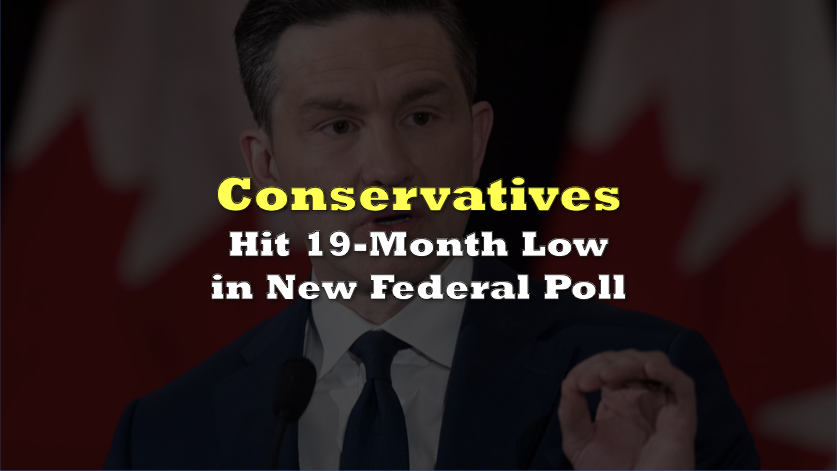

Conservative Leader Pierre Poilievre unveiled a bold proposal this week to establish a strategic oil and minerals reserve, aiming to enhance Canada’s negotiating power in global trade and capitalize on rising commodity prices. Speaking in Toronto, he framed the plan as a critical step toward making Canada affordable at home and unbreakable abroad.
The reserve would leverage Canada’s vast natural wealth, including the world’s third-largest uranium supply and fourth-largest oil reserves, to secure economic autonomy. Poilievre argued that such a stockpile could shield the nation from volatile global markets and strengthen its position against trade partners.
He pointed to current inefficiencies, noting that despite abundant resources, Canada now imports oil from Saudi Arabia and Nigeria while failing to maintain a domestic oil reserve—the only G7 country in this position.
 Sponsored · Silver47 Exploration Inc.
“I will initiate a plan for a Strategic Energy and Mineral Reserve where our energy and our minerals that are necessary for warfare and security will be stored at key locations across our country and kept on reserve for the time when they’re most needed,” Poilievre said. “We have 10 of the 12 NATO-defined critical minerals, some of the most important to wage a war. We should be using this, by the way, as leverage with the United States of America.”
Beyond the reserve, Poilievre painted a stark picture of Canada’s economic decline under current leadership. He cited a half-trillion dollars in investment fleeing the country over the past decade, with twice as much capital leaving as returning, according to a recent RBC report. Household debt, housing affordability, and food price inflation all rank as the worst in the G7, while 2.2 million Canadians—double the number from seven years ago—rely on food banks monthly.
Small businesses, a cornerstone of the economy, are also buckling. The Canadian Federation of Independent Business reported that more businesses have closed than opened for six consecutive quarters, with exit rates hitting 5.6% in Q2 2025 against entry rates of just 4.8% in Q4 2025. Over 55% of small business owners now discourage others from starting ventures due to high costs, red tape, and labor challenges.
Poilievre tied these struggles to a broader vision of reclaiming Canada’s potential as the richest and most affordable nation on earth. He criticized policies under Mark Carney’s influence, highlighting Canada’s lowest per-worker investment and second-highest unemployment in the G7. The proposed reserve, he suggested, could be a turning point.
The plan comes as Canada grapples with an unprecedented inability to produce enough electricity for its own needs this year, despite abundant hydro, uranium, and natural gas resources. Poilievre’s call for strategic stockpiling aims to address such vulnerabilities, with potential impacts on trade balances projected to unfold by late 2026.
Information for this story was found via the sources and companies mentioned. The author has no securities or affiliations related to the organizations discussed. Not a recommendation to buy or sell. Always do additional research and consult a professional before purchasing a security. The author holds no licenses.