
A 60-day sanctions waiver on Iranian oil has already moved markets, pushed more tankers back through the Strait of Hormuz, and lowered crude prices. But the central political claim behind President Donald Trump’s latest Iran victory lap remains unresolved: whether Tehran actually agreed to the sweeping nuclear inspections Washington says it secured.
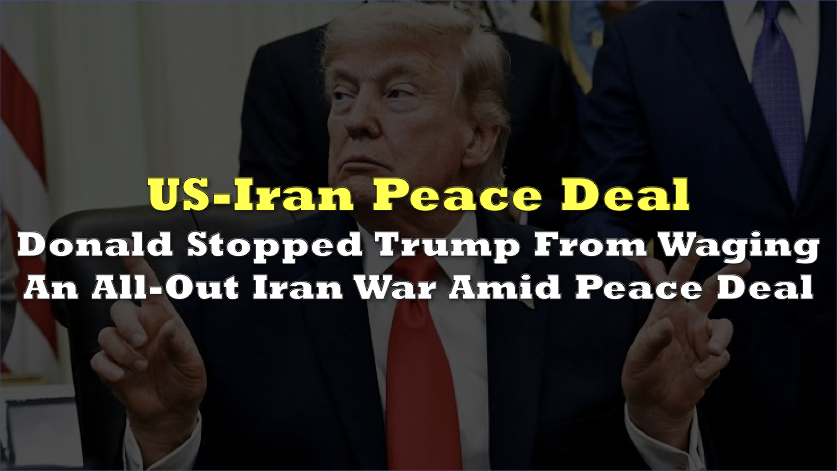
Trump said Tuesday that Iran had “fully and completely” agreed to the “highest level” of nuclear inspections “long into the future,” describing the arrangement as the basis for continued negotiations. He also said the US would allow the Strait of Hormuz to remain open while keeping ships in place in case Washington decides to restore a blockade.
Iran’s response was blunt. Foreign Ministry spokesman Esmaeil Baghaei said Tehran had not scheduled a visit by International Atomic Energy Agency inspectors to nuclear sites damaged by US bombing and had no plan for such access beyond its existing obligations under the Nuclear Non-Proliferation Treaty and IAEA safeguards agreement.
US oil prices fell after the Treasury Department issued a 60-day waiver on Iranian oil sanctions, with MarketWatch reporting WTI crude for August delivery down 2.6% to $73.86 and Brent crude down 3.2% to $77.52 on June 22.
 Sponsored · Selkirk Copper Mines
Trump said 19 million barrels of oil passed through the strait on Monday, a figure Reuters included in its coverage of the market reaction.
Shipping data also points to a limited thaw. Reuters reported that three previously stranded supertankers and seven Qatar-linked LNG tankers transited the Strait of Hormuz as traffic cautiously resumed. The same report said the sanctions waiver runs until August 21 and comes alongside a 60-day roadmap toward a longer-term agreement.
While that is the part of the deal markets can price, the inspection dispute is the part governments still cannot reconcile in public.
Vice President JD Vance said talks in Switzerland produced an agreement for Iran to allow IAEA inspectors back into the country. AP reported that Iran’s foreign ministry rejected the idea that inspectors had been cleared to visit nuclear sites bombed by the US, undercutting Vance’s account.
Trump then escalated the claim by saying Iran had agreed to indefinite, high-level inspections. Reuters reported that Iran denied starting discussions on its nuclear program or inviting IAEA inspectors, leaving Washington and Tehran publicly describing different deals.
On top of this, Trump also said any released money or sanctions relief would go into escrow controlled by the US and be used to buy food and medical supplies from the US, including corn, wheat, and soybeans.
That framing turns sanctions relief into a domestic political pitch: Iran gets humanitarian goods, US farmers get demand, and Washington says it retains control over the money.
But AP reported that disputes remain over how unfrozen Iranian assets would be used, with Iran rejecting US claims that the funds would be directed toward American crops.
That gap matters for enforcement, optics, and whether the arrangement survives beyond the initial 60-day window.
Hormuz is reopening, but not normal
Trump said there would be no further naval blockade of the Strait of Hormuz, while adding that US ships would remain in place if needed. Reuters reported that tanker movements are increasing but still constrained by disruption, mine threats, and port-related complications.
The operational risk is not theoretical. In a Reuters report, Phillips 66 CEO Mark Lashier said disruptions through Hormuz could linger, citing shipping uncertainty and an estimated 90 million to 100 million barrels of crude stuck in the strait. He said the backlog would take time to clear because onshore storage tanks are full.
The domestic politics are already messy. CBS News reported that Americans broadly wanted the Iran war to end, especially those hit by gas prices, but many doubted that US strategic and economic goals had been met. A CBS News and YouGov polling found that 56% of MAGA voters and 60% of Republicans supported ending the war now, while 44% of MAGA voters wanted the conflict to continue until Iran made more concessions. The same report said only 36% of Americans approved of Trump’s handling of Iran.
That political split explains the inspection messaging. For Trump, the claim of indefinite nuclear access turns a sanctions waiver and open waterway into a declared strategic win. For critics, Iran’s denial makes the arrangement look like front-loaded relief for back-loaded promises.
In the meantime, the deal’s first visible achievement will remain oil moving through Hormuz while the nuclear question stays unanswered. How long will that last is a simple practical test hinged on one of the key reasons this war started—nuclear.