
President Donald Trump’s latest shift on Iran came within roughly 24 hours. After canceling a planned large-scale attack and saying formal negotiations would begin Monday afternoon, the president changed his account after Tehran denied that any meeting had been scheduled, claiming instead that talks were already happening and calling them Iran’s “last chance” to avoid renewed strikes.
Iran’s Foreign Ministry said it was holding discussions only with Oman over the Strait of Hormuz and was not negotiating with Washington, leaving markets to react to another de-escalatory announcement whose underlying diplomatic basis remained disputed.
CBS News reported that US officials undercut Trump’s announcement of new talks, saying no new negotiations were planned and that only existing indirect contacts through mediators were continuing.
 Sponsored · Selkirk Copper Mines
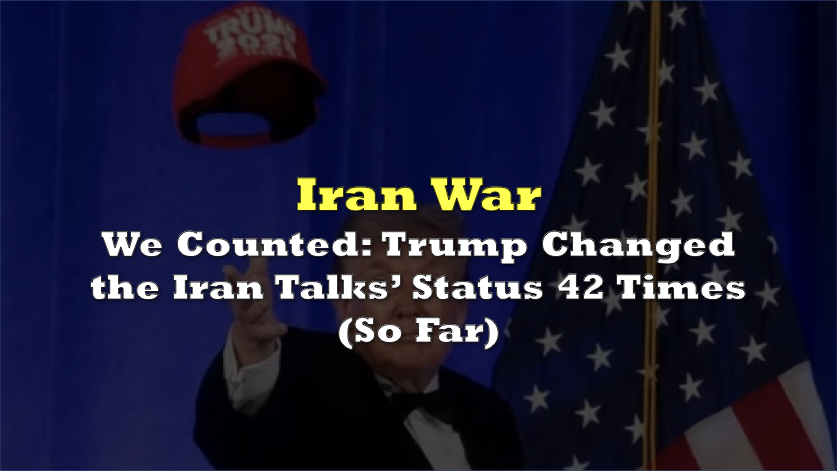
With this latest change, Trump has now materially revised his public description of the US-Iran negotiations 42 times between February 19 and August 3, according to a review of presidential statements, official announcements, and publicly available reporting.
The shifts ranged from declaring negotiations imminent, suspended, or effectively over to revising their deadlines, format, conditions, proposed signing dates, and likelihood of success.
The pace amounted to roughly one material change every 4 days.
The count tracks how frequently the president changed the publicly presented status of diplomacy after the first Oman-mediated negotiating round on February 6. Each counted entry required a distinct public statement or post by Trump that materially changed his description of whether negotiations existed, their timing, format, conditions, prospects, or expected outcome.
- February 19: Trump imposed the first publicly specified deadline of the renewed negotiations, giving Iran 10 to 15 days to reach what he called a meaningful agreement or face “really bad things.” That marked a shift from his position after the February 6 Oman round, when he said another meeting would occur the following week but maintained that Washington had “plenty of time” to reach a deal.
- March 1: The US and Israel attacked Iran, replacing the prewar negotiating process with open military action. One day after the war began, Trump said Iran’s new leadership wanted to speak with him and that he had agreed, reopening the possibility of diplomacy.
- March 6: Trump rejected the idea of an ordinary negotiated compromise, saying there would be no agreement except Iran’s “unconditional surrender.”
- March 23: Trump said productive conversations were taking place and postponed threatened attacks on Iranian energy infrastructure. Iran disputed that negotiations had occurred.
- March 24: Trump strengthened his claim, saying negotiations were happening “right now” and that Washington was speaking with the appropriate Iranian representatives. Iran disputed that negotiations were occurring as Trump described them.
- March 26: Trump extended the pause for 10 days, saying Iran had requested additional time and that negotiations were going well.
- April 6: Trump said Iran had submitted a significant proposal but declared it insufficient. He described the following day’s deadline as final.
- April 7: Less than two hours before the deadline, Trump accepted Iran’s response as a basis for further diplomacy and announced a two-week ceasefire.
- April 14: Trump revived expectations of another round, saying the parties could meet again within two days.
- April 14 (later): Trump initially said the next meeting would probably be held in Europe, then said it could instead return to Islamabad.
- April 17: Trump revised the timetable again, saying another meeting would probably occur over the weekend and that the war should end soon.
- April 21: Trump announced an indefinite ceasefire extension, saying mediators needed more time for Iran to prepare a proposal. Iran had not confirmed another negotiating round.
- April 25: Trump canceled a planned trip by US negotiators and said Iran’s improved offer remained insufficient, leaving Tehran to initiate further contact.
- May 6: Trump said the US had held “very good” talks with Iran during the previous 24 hours and that an agreement was highly possible.
- May 7: Trump said it was too soon for new direct negotiations while threatening a higher level of strikes if Iran rejected the proposed agreement.
- May 11: Trump said the ceasefire was “on life support,” rejected Iran’s latest response as unacceptable, and described it as a “piece of garbage.”
- May 18: After threatening a major attack, Trump postponed it because “serious negotiations” were underway and said there was a good chance of an agreement.
- May 19: Trump said an attack could still occur within days and claimed Iran was “begging” for an agreement.
- May 20: Trump softened the timeline again, saying Washington could wait several days for the “right answers,” although military forces remained ready.
- May 23: Trump said an agreement, including the reopening of the Strait of Hormuz, had been “largely negotiated.”
- May 27: Trump reversed the near-deal framing, saying Iran was “negotiating on fumes” and that Washington was no longer satisfied.
- June 1: Trump disputed reports that Iran had suspended negotiations, saying he had not been informed of any withdrawal.
- June 2: Trump said negotiations had been continuous and that an agreement was close. Iranian reporting indicated that the sides had not communicated for several days.
- June 10: Trump said Iran had taken too long to negotiate and would now “pay the price.”
- June 11: After threatening new strikes earlier in the day, Trump announced that negotiations had produced a breakthrough and canceled the planned attack.
- June 11 (later): Trump moved from describing progress to claiming that a “great settlement” had been reached and predicted that it could be signed within days, possibly over the weekend in Europe.
- June 13: Trump changed the projected signing date to Sunday and said the Strait of Hormuz would reopen immediately afterward.
- June 15: After the Sunday timetable slipped, Trump said an agreement remained possible “in a matter of hours.”
- June 17: After the initial memorandum was signed, Trump described the settlement as conditional and warned that US attacks could resume if the final process failed to satisfy him.
- June 21: As follow-up talks opened, Trump threatened to restart the war if talks failed.
- July 6: Trump said Washington would either reach an agreement with Iran or “finish the job.”
- July 8: Trump declared the interim memorandum “over,” said he did not want to engage with Tehran, and expressed uncertainty over whether he still wanted a deal.
- July 10: Two days later, Trump said the US had agreed to Iran’s request to continue talks despite declaring the ceasefire over. Iran disputed that it had requested US negotiations.
- July 15: Trump said Iran wanted to “settle so badly,” while maintaining that Washington would decide whether to accept an agreement.
- July 21: Trump said Iran desperately wanted a meeting, but that the US had “no interest” until Tehran was prepared to negotiate meaningfully.
- July 24: Trump said the two countries were talking again but that Iran was not yet ready for an agreement.
- July 27: Trump described the negotiations as “good talks,” said an agreement had a strong chance, and paused US strikes. Iran said it had not requested renewed negotiations.
- July 31: Trump said an agreement remained possible but that he was “losing faith” because Iran frequently broke its word. He also said the US would be “hitting them.”
- August 1: Trump canceled a planned attack, saying Iran and regional governments had requested more time and that the basic parameters of a rapid agreement had been established.
- August 2: Trump said formal negotiations would begin Monday afternoon and that a deal involving the Strait of Hormuz and Iran’s nuclear program was imminent.
- August 3: Iran said no US meeting was planned, while US officials told CBS News that no new negotiations had been arranged and that existing indirect contacts through mediators were continuing. Trump responded that Iran had requested or “begged” for talks and that further meetings were scheduled.
- August 3 (later): Trump said the US and Iran were “in fact, talking,” called the process Iran’s “last chance,” and said he wanted to provide every opportunity “before decapitation.”
Trump’s cancellation of the planned attack and claim that negotiations were imminent moved markets before the diplomatic process had been confirmed. Brent crude settled down $6.35, or 7.0%, at $83.77 per barrel on August 3, while WTI fell $4.33, or 5.1%, to $80.34.
Reuters reported that the decline took oil prices to a three-week low.
That reaction illustrates the strategic significance of the changes. The tally is not simply a record of inconsistent language. Many of the revisions have altered expectations for military strikes, shipping through the Strait of Hormuz, sanctions, crude supplies, and US gasoline prices.
The latest dispute left the diplomatic process publicly unresolved. Trump said US-Iran talks were active and a settlement remained possible. Iran denied that direct talks or a new meeting were taking place, while US officials told CBS News that existing indirect contacts through mediators were continuing.