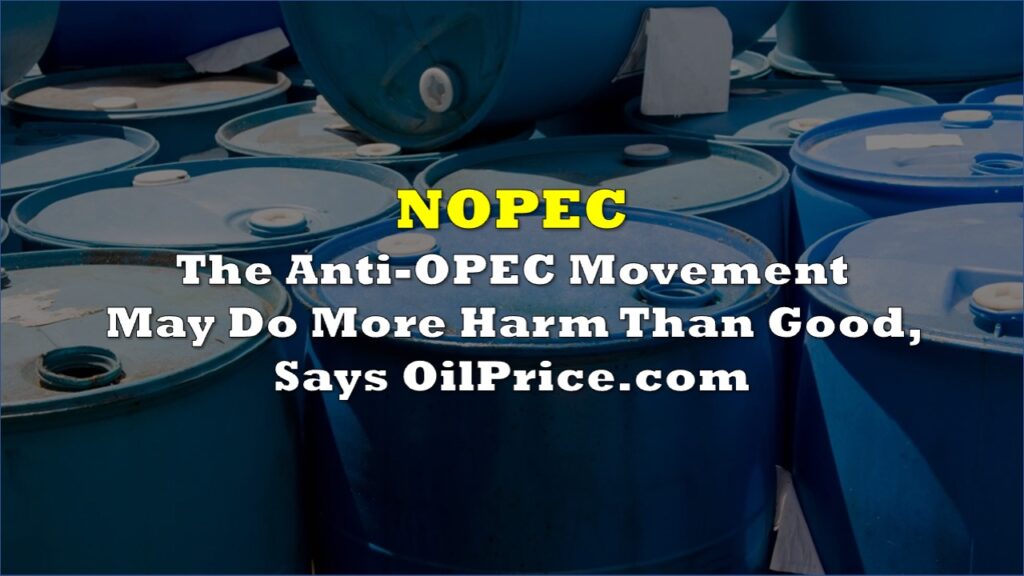

The UAE’s decision to leave OPEC and OPEC+ effective May 1 raises a larger threat than the loss of one producer: it may show other ambitious members that the fastest way around production limits is to quit the cartel.
The Middle East government announced the exit on Tuesday after reviewing its “current and future capacity,” ending a relationship that began when Abu Dhabi joined OPEC in 1967 and continued after the UAE’s formation in 1971.
Energy Minister Suhail Mohamed al-Mazrouei said the decision was not coordinated with Saudi Arabia or any other country.
 Sponsored · Silver47 Exploration Inc.
The immediate market impact may be muted because the Strait of Hormuz remains largely shut amid the Iran war, restricting Gulf exports through a route that normally carries about one-fifth of the world’s oil. Brent crude traded above $111 a barrel on Tuesday, more than 50% above its prewar level, according to AP.
The long-term issue is supply discipline. Robin Mills, CEO of Dubai-based Qamar Energy, told CNN that OPEC had most recently limited the UAE to about 3.2 million barrels per day, while the country’s production capacity is closer to 5 million barrels per day.
In essence, the UAE’s departure could encourage other producers to consider whether OPEC’s restrictions still serve their national interests.
For OPEC, the danger is not only barrels. The group’s influence depends on members believing that coordinated output limits are worth more than unilateral volume growth. If one of its largest Gulf producers leaves to pursue higher production, other members may see quota compliance as a negotiable cost rather than a binding strategic commitment.
The UAE had long objected to production limits it considered too low, especially after spending heavily to expand capacity. The country had pushed back in recent years against OPEC quotas because they prevented it from selling as much oil as it wanted.
Capital Economics’ David Oxley said the move suggests global supplies will be higher than they otherwise would have been once the Strait of Hormuz reopens, while analysts cited by CNN framed the UAE as a producer that had been “itching to pump more oil.”
The exit also lands as OPEC’s internal hierarchy faces pressure. Saudi Arabia remains the group’s de facto leader, but the UAE’s move undercuts the appearance of Gulf alignment on production policy.
Information for this story was found via Reuters, AP, and the sources and companies mentioned. The author has no securities or affiliations related to the organizations discussed. Not a recommendation to buy or sell. Always do additional research and consult a professional before purchasing a security. The author holds no licenses.