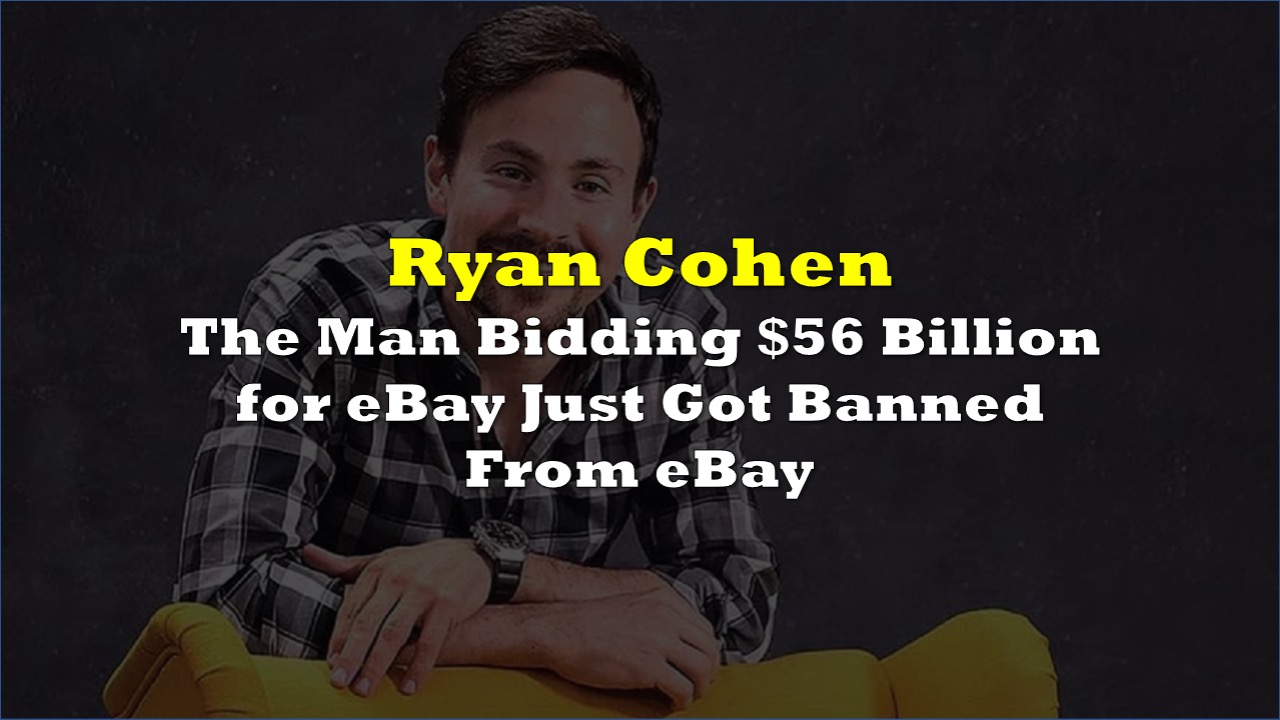

Ryan Cohen launched a $56 billion hostile bid for eBay (Nasdaq: EBAY), listed his personal belongings on the platform to fund the deal, and was permanently banned from eBay for his trouble — all within five days.
The stunt came days after Cohen’s combative CNBC appearance, in which he repeatedly deflected questions about how a company with an $11 billion market cap could finance a $56 billion acquisition. Cohen’s answer, “the details are on our website,” did little to reassure investors.
He then took to eBay itself, listing personal items including a pair of socks to raise money “on eBay to pay for eBay,” racking up scores of bids totaling tens of thousands of dollars. eBay responded by permanently suspending his account, citing “activity that we believe was putting the eBay community at risk.”
 Sponsored · Selkirk Copper Mines
Cohen posted the notice to X with a deadpan three words: “I have been suspended from eBay.”
He also turned up the pressure on eBay’s leadership, posting on X that insiders had purchased $0 of company stock in the open market over five years while selling more than $120 million worth — the same argument he made when taking over GameStop (NYSE: GME) as a case study in entrenched, underperforming management.
GameStop’s unsolicited, nonbinding offer — filed with the SEC on May 3 and addressed to eBay chairman Paul Pressler — proposes $125 per share, split evenly between cash and GameStop stock, with a highly confident letter from TD Securities for up to $20 billion attached.
Cohen pledged to serve as CEO of the combined company with no salary, no bonuses, and no golden parachute. He has not spoken with eBay’s management.
eBay’s board confirmed receipt of the proposal and said it would evaluate the offer with a focus on shareholder value and “the ability of GameStop to deliver a binding, actionable proposal.” The board meets this week; Semafor, citing the financing gap, believes the bid is likely dead on arrival.
eBay shares jumped more than 12% on Cohen’s initial media push — before surrendering all gains. Kalshi traders put the odds of GameStop completing the deal in 2026 at just 26%, though volume on the contract was thin. GameStop shares fell 10% on the announcement.
Cohen’s pitch remains what it was on CNBC: operational efficiency, leverage, and the promise that eBay would generate far more revenue under leaner leadership.
“There’s going to be some leverage on the balance sheet,” he acknowledged, “but it’s also going to be making a lot more money in the future than it is today because it is going to run a lot more efficiently.”
Information for this story was found via the sources and companies mentioned. The author has no securities or affiliations related to the organizations discussed. Not a recommendation to buy or sell. Always do additional research and consult a professional before purchasing a security. The author holds no licenses.