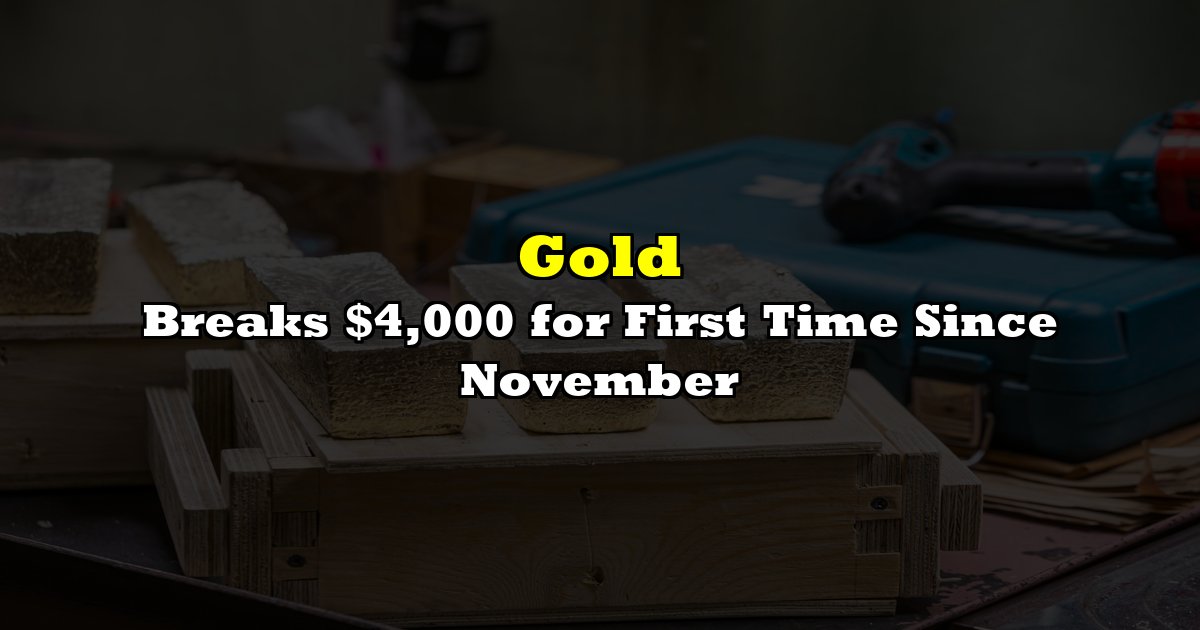

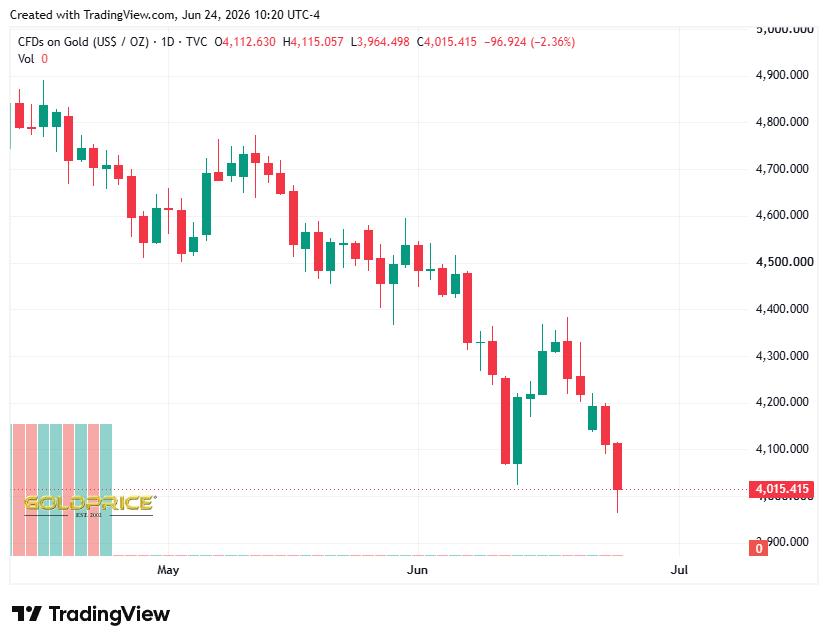
A hawkish pivot from new Fed Chair Kevin Warsh has finished what the US-Iran war started, dragging spot gold below $4,000 an ounce on Wednesday for the first time since November 2025. From its all-time high of $5,594.82 set in late January, the metal has now shed more than $1,500, a decline of roughly 30%.
Warsh’s debut rate-setting meeting last week rattled markets that had grown comfortable with the so-called debasement trade, a strategy favouring assets like gold and Bitcoin over currencies exposed to inflationary and fiscal excess. His stated commitment to price stability and his long-standing reputation as an inflation hawk prompted traders to radically reassess where rates were heading.
Markets are now pricing a hike as soon as September. “If the Fed has got the hiking bias, it’s really hard to play the debasement card,” said Meera Chandan, JPMorgan’s co-head of global foreign-exchange strategy.
 Sponsored · Cambria Gold Mines
ING commodities strategist Ewa Manthey pointed squarely at this shift in her Wednesday note. “The primary driver behind gold’s recent decline has been a significant repricing of interest-rate expectations.”
The debasement trade had underpinned bullion’s three-year rally, fuelled by persistent above-target inflation, surging government borrowing, and widespread concern that the dollar’s purchasing power was in structural decline. Warsh’s nomination alone began to unwind those bets, with his appointment widely read as a signal that looser monetary conditions were drawing to a close.
Gavyn Davies, an economist who leads Fulcrum Asset Management and previously served as chief economist at Goldman Sachs, was blunt about what markets should expect. “Anyone who thinks that he is some kind of a stooge that’s been put in there to cut interest rates regardless of inflation is going to really, really be disappointed with Kevin Warsh.”
The US-Iran conflict compounded the damage well before Warsh entered the picture. Elevated energy prices stoked inflation and raised the likelihood of rate hikes, simultaneously pushing some emerging-market central banks to liquidate gold reserves in order to cover surging energy import costs and defend their currencies. Oil has started retreating as peace negotiations advance, but the hit to gold sentiment has proved durable.
A strengthening dollar, now at its highest level since May 2025, has added a further headwind by raising the cost of dollar-priced bullion for buyers transacting in other currencies. ING has responded by cutting its gold price forecasts, projecting averages of $4,300 an ounce in Q3 2026 and $4,600 in Q4, down from prior estimates of $4,850 and $5,000.
Independent metals trader Tai Wong argued that ongoing central bank purchases make an outright collapse unlikely, but warned that gold could face “a potentially long period of consolidation” as the trade falls out of favour.
Information for this story was found via the sources and companies mentioned. The author has no securities or affiliations related to the organizations discussed. Not a recommendation to buy or sell. Always do additional research and consult a professional before purchasing a security. The author holds no licenses.